
Best Marinas in Scotland: Value, Sailing and What to Expect
Looking for a berth in United Kingdom?
Tell us your boat once and we'll ask the marinas in United Kingdom that are most likely to take it. We pass their answers on to you, and it's free.
Get berth quotesScotland offers some of the finest and most varied cruising in the British Isles — sheltered lochs, remote anchorages, historic canals and a west coast that rivals anywhere in Europe for scenery. It's also, in many cases, better value than the south of England. Here's our 2026 guide to the best marinas in Scotland, region by region, with real prices and what to expect once you arrive.
The Firth of Clyde: Scotland's sailing heartland
Most Scottish sailors start here. The Clyde is sheltered by Arran, Bute and the Cowal peninsula, has a dense cluster of marinas within easy reach of Glasgow, and hosts some of the country's best racing, including the Scottish Series at Tarbert.
Largs Yacht Haven is widely regarded as Scotland's premier marina and is a good benchmark for pricing across the Clyde. For the 2026/27 season, annual berthing runs from £1,848 flat rate for boats up to 6m, rising to £474/m for 6.1–7m, £603/m for 7.1–12.1m and £627/m for boats over 12.2m (all including VAT, minimum chargeable length 6.1m). Pay in full three months ahead and you get a 2.5% early payment discount. Visitor berthing is £4.50/m overnight or £82/m for a month, with electricity and Wi-Fi included, and a useful perk: an annual contract at Largs includes free, unlimited berthing at its sister marina, Troon Yacht Haven, on the Ayrshire coast.
Kip Marina at Inverkip, on the south side of the Clyde, is another long-standing favourite. Its 2026/27 tariff includes a seasonal summer berth rate of £440/m, a flat annual day-boat rate of £1,910, and temporary berthing at £3.40/m per day, £21/m per week or £78/m per month — competitive rates that make it a popular stopover as well as a home berth.
Further along the coast, Clyde Marina at Ardrossan and marinas at Rhu and Troon round out the Clyde's options, with visitor rates typically in the £3–4/m per night bracket across the estuary — check individual marina websites for current figures, as these are updated annually each spring.
Argyll and the west coast: gateway to the Hebrides
North and west of the Clyde, Argyll's sea lochs and the approach to the Hebrides offer some of the most spectacular cruising anywhere in the UK — the ground stretches from the Mull of Kintyre in the south to Cape Wrath and beyond, taking in the Sound of Jura, the Small Isles and, for the adventurous, St Kilda.
Portavadie Marina, on Loch Fyne, is a purpose-built modern development with 230 fully serviced berths for vessels up to 80ft, plus a spa, pool and restaurant on site. Its service and storage pontoons are priced from £82.50 a month for small berths (up to 6.5m LOA) to £231 a month for larger berths (up to 12m LOA) — good value given the facilities on offer.
Further north, Craobh Marina on the Craignish peninsula has 250 berths and came under new ownership in 2025, with pontoon, facility and bar/restaurant upgrades either completed or under way through 2026. Nearby Ardfern Yacht Centre on Loch Craignish is a well-established option with boatyard and chandlery services alongside its berths. Both sit close to the Crinan Canal — the nine-mile "shortcut" linking the Sound of Jura to Loch Fyne, often called one of the most beautiful stretches of inland waterway in Britain.
Dunstaffnage Marina, three miles north of Oban, has 250 fully serviced, year-round berths and is one of the best-placed bases for exploring the Hebrides — Mull, Coll, Tiree and the Small Isles are all realistic day sails or short hops away. Oban itself, with its own marina and pontoons at nearby Kerrera, is the traditional starting point for a two- to three-week west coast cruise, and Mallaig further north offers pontoon berths with a rail link back to Fort William and Glasgow.
The Highlands and the Caledonian Canal
For sailors wanting to link Scotland's east and west coasts without the long and often boisterous passage round the north, the 60-mile Caledonian Canal is the answer — running from Fort William through Loch Lochy, Loch Oich and Loch Ness to Inverness. It operates seven days a week in spring, summer and autumn (Monday to Friday in winter, subject to maintenance works), and transiting it is as much a highlight of a Scottish cruise as any marina stop.
At the eastern end, Inverness Marina is a Four Gold Anchor facility and one of the best-value bases in the country: annual berthing for the 2025/26 season is £300 per metre LOA, with visitor rates of £5 per day or £30 per week — a fraction of equivalent Clyde or Solent pricing, and a genuinely high standard of service to match.
The Forth and the east coast
Scotland's east coast is quieter for leisure sailing but not without options. Port Edgar Marina, tucked beneath the Forth bridges just west of Edinburgh, has 300 fully serviced pontoon berths and is the natural base for sailors exploring the Firth of Forth, with the capital itself a short drive away. It's a useful stop for boats making the passage between England's east coast and the Caledonian Canal or the Northern Isles.
What to expect: costs, waiting lists and the sailing season
Two things stand out when comparing Scotland with the south coast of England. First, value: annual berthing at most Scottish marinas — Inverness and Portavadie especially — comes in well below equivalent facilities on the Solent or south coast, even at Four and Five Gold Anchor sites. Second, weather and season matter more here. The core cruising season runs roughly from May to September, with many marinas offering discounted winter berthing or "summer 7" packages (typically April to October) rather than requiring a full annual contract — worth asking about if you don't sail year-round.
Waiting lists exist at the most popular Clyde marinas, particularly for larger berths at Largs and Troon in peak season, but they're generally shorter and more manageable than the multi-year queues seen at some south coast marinas. Facilities across the board tend to be modern: most of the marinas above are Yacht Harbour Association members and hold Gold Anchor accreditation, meaning serviced pontoons, decent shoreside facilities and, in most cases, a boatyard for lift-out and winter storage on site.
One practical note for anyone new to Scottish waters: tidal ranges and currents, particularly around the Mull of Kintyre, the Corryvreckan whirlpool near Craobh, and the approaches to the Caledonian Canal, are significant and need proper passage planning. It's part of what makes the cruising here so rewarding, but it rewards preparation rather than improvisation.
Boat choice matters too. Bilge-keel and lifting-keel yachts are common on the west coast because many of the more remote anchorages and some drying harbours favour a boat that can take the ground comfortably, while the Clyde's deeper marinas suit any fin-keeled cruiser. If you're planning to base a boat in Scotland for the first time, it's worth speaking to the marina office directly about typical swell, prevailing wind direction on the berth, and how sheltered the pontoons are in a westerly blow — conditions vary noticeably between, say, an exposed Clyde-facing berth and a sheltered loch-head marina like Portavadie or Craobh.
Finding your Scottish berth
Whether you're chasing value at Inverness, the Hebridean gateway at Oban, or the racing scene on the Clyde, Scotland has a marina to match almost any brief — and, in most cases, at a lower price than you'd pay further south. BerthFinder lists marinas across the Clyde, Argyll, the Highlands and the east coast, so you can compare berths, prices and facilities side by side before you commit.
Search Scotland's marinas on BerthFinder to compare berths and enquire directly — free, with no commission and no booking fees.
Plan your next trip in the app
Save marinas, check availability and send enquiries from your phone — free on iPhone.
Download on the App Store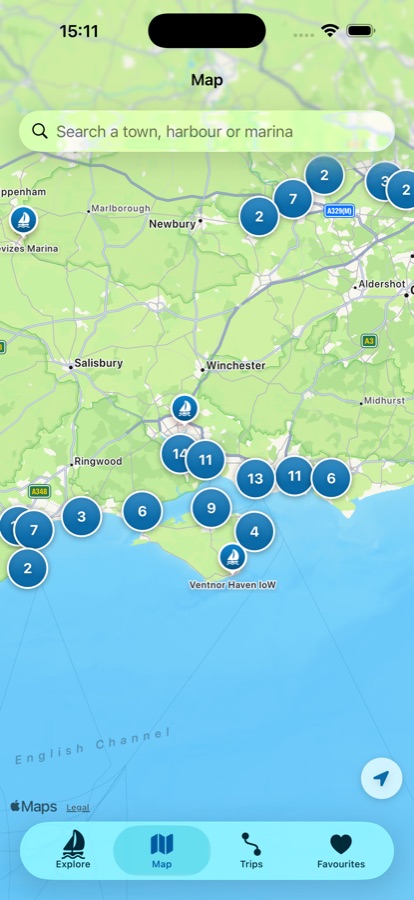
Get real prices for your boat
Tell us your boat and where you're heading. We'll ask the marinas that fit and send you their answers, so you don't have to email each one.
Get berth quotes